Running Mobile Embroidery Across a Multi-City Roadshow
When to stitch and when to press.
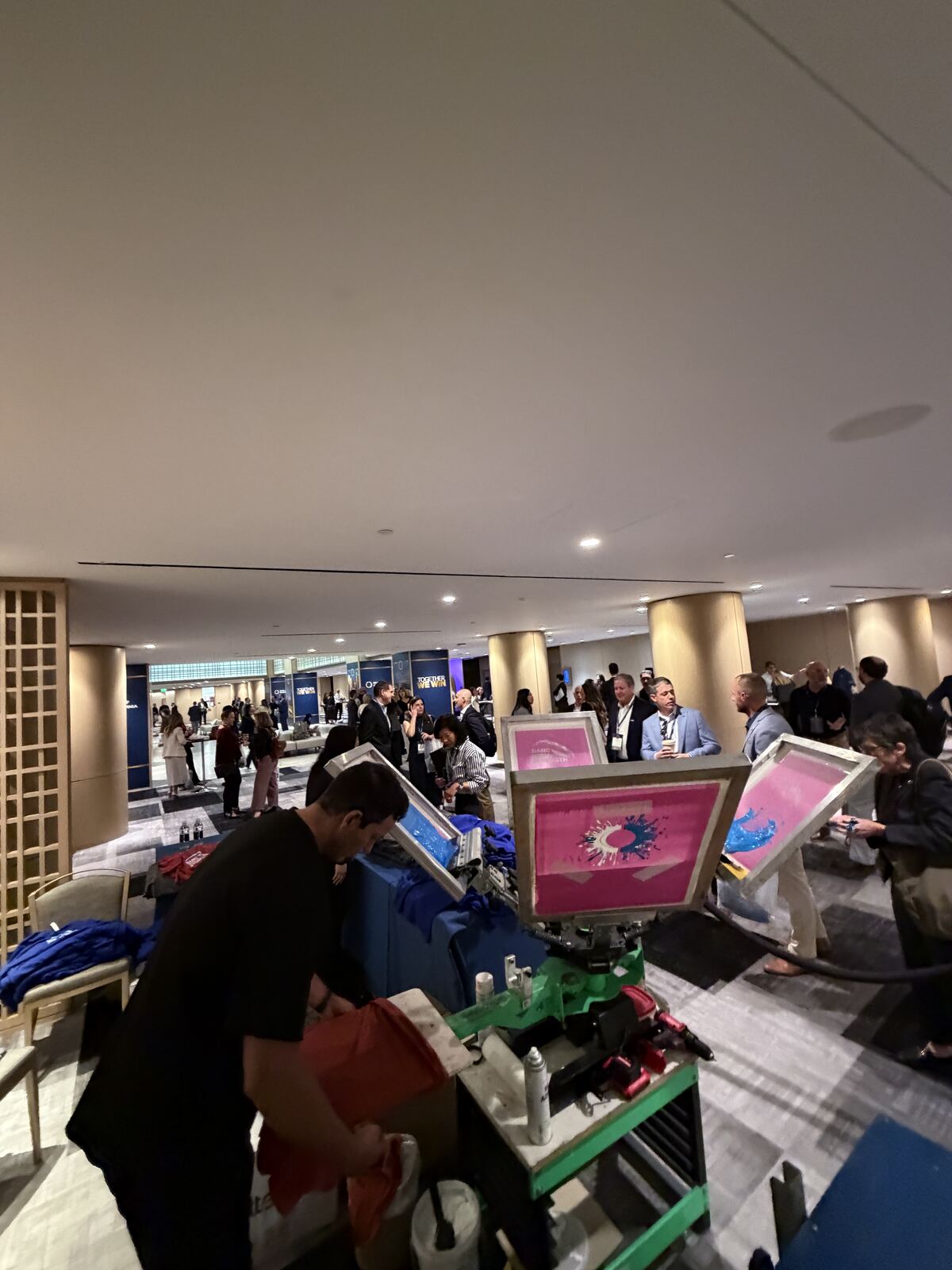
A single embroidery station at a single event is a solved problem. Twelve of them across eight cities in six weeks, with the same thread colors, the same stitch quality and the same twenty-minute load-in window, is a logistics exercise that happens to involve needles.
Mobile embroidery for multi-city roadshows breaks in predictable places: transit, calibration, consumables and blanks. Everything below is about closing those four gaps before the tour starts, because a roadshow gives you no room to fix them mid-run.
The leapfrog decision comes first
The structural choice on any tour longer than about four stops is whether you run one kit that travels with the crew or two kits that leapfrog. One kit is cheaper and means every transit day is a dead day. Two kits cost more hardware and let city five build out while city three is still running, which collapses the schedule and gives you a spare machine if something breaks in Denver at 6am.
Our rough line: four to six cities in a month with short drive legs, one kit is fine. Ten cities, flights between them, or two stops in the same week, get the second kit. The moment a tour depends on a single machine arriving on time, you have built a schedule with one point of failure and no backup plan.
Sixty to ninety minutes, every single time
Embroidery machines are precision equipment that dislikes being in a truck. After transport, expect to re-level, check timing, re-thread, and run test sew-outs before a guest sees the station. That is 60 to 90 minutes per city, and pretending it is twenty is the most common way a roadshow starts late.
Two things make it faster. First, a physical approved sew-out sample lives in the road case and travels the whole tour — not a photo, the actual stitched piece. The lead compares the first sew-out of each city against it before opening. Second, a settings card taped inside the case with thread brand, needle size, stabilizer weight and speed for each design on the tour, so nobody rebuilds the setup from memory in a loading dock.
Convention centers add their own tax. Many require union labor to move freight, which means your crew may not push its own cases from the dock. Ask about that at contract, not at 6am.
Count thread, bobbins and needles like fuel
Nothing embarrasses a tour like running out of navy in Phoenix. Build a per-city consumable pack and over-pack it, because local sourcing on a Tuesday morning in an unfamiliar city is not a plan.
- Thread. Full backup cones of every color in the tour palette, from the same brand and dye lot family. Switching brands mid-tour changes the look enough to notice in side-by-side photos.
- Bobbins. A dense cap logo burns through them fast. Pre-wound bobbins by the box, and a counted allocation per city so you notice a shortfall before it happens.
- Needles. Change on a schedule, roughly every eight to ten running hours, and immediately after any cluster of thread breaks. A dull needle is the usual cause of the fraying nobody can explain.
- Stabilizer. Cut-away and tear-away in the weights your designs were digitized for, plus topping if you are running on fleece or pique.
Do not haul garments across the country
Ship blanks to each stop, not between them. Target arrival three business days before the date, addressed to a named human at the venue or an adjacent hotel, with a case count on the paperwork so the receiving desk can confirm what showed up. Convention centers usually charge drayage by weight or by piece to move your boxes from their dock to your booth, and that fee is worth knowing before you decide how many cases to send.
Overage stays local. Give it to the regional office, donate it, or ship it home at the end — but do not put it back in the truck to be counted again in the next city. And because embroidery is slow, order tighter than you would for a print station: roughly 1.05 to 1.15 pieces per expected participant, where participant means the number you can physically stitch, not the number in the room.
Appointments beat queues on a tour
Embroidery runs 6 to 12 minutes a piece depending on stitch count, which is five to ten pieces an hour per head. That is the whole planning constraint. A four-hour activation with one head serves maybe thirty people. If your roadshow expects two hundred attendees per city, you either add heads, add hours, or change what the station promises.
The best version we have run on tours is an appointment or ticket model: attendees claim a slot, drop their garment, and collect it later with their name or the city on it. It removes the queue, it guarantees the station never looks empty or overwhelmed, and it gives your team a captured list of who engaged. Where volume genuinely matters, pair a slow embroidery station with a faster transfer station — the comparison in mobile embroidery versus heat transfer lays out where each one earns its place.
Staffing follows the same logic. One traveling lead owns the machine and the quality bar; local hands own the queue, the sizing table and the hand-off. That split keeps your payroll sane and means only one person has to know the machine intimately. Lock artwork and digitizing about ten business days before the first city, book the tour four to eight weeks out, and expect a flat travel fee on stops outside our Southern California base — the cost factors post breaks that down, and pricing shows what a staffed package covers.
Frequently asked questions
How many cities can one mobile embroidery kit realistically cover?
A single kit with a traveling lead can handle four to six cities in a month if the drive legs are short and each stop is a single day. Beyond that, transit days and machine recalibration start eating the schedule. Longer tours usually justify a second kit leapfrogging ahead so no city waits on a truck.
How long does setup take in each new city?
Budget 60 to 90 minutes per stop, not twenty. The machine needs to be re-leveled, re-timed if it was trucked, threaded, and run through test sew-outs against the approved reference sample. Convention centers with union labor rules can add more, because your crew may not be permitted to move its own cases.
Should we ship blanks between cities or to each venue?
Ship to each venue or a nearby hotel, timed to arrive three business days ahead with a named receiver and a case count. Moving blanks city to city means paying to transport your own overage and risking a delayed truck. Keep leftovers local for a regional office or donate them rather than dragging them along.
Send us the routing and we will build the schedule
Cities, dates, venue types and expected attendance per stop is enough for us to come back with a kit plan, a consumable budget and a per-city cost. Start a quote or call (562) 614-4800 and walk us through the route.
Tell us about your event once.
Share the date, city, guest count, and what you want personalized. We'll map the right number of embroidery heads, thread colors, and staff so your line keeps moving.